Like we do every Sunday, a group of my best friends gathered at the Warehouse Basketball Facility to play hoops before the Super Bowl. I warmed-up well, briefly stretched out and began to play. Up to this point, there was nothing unusual about the morning. I had no idea that 45 minutes later I would rupture my Achilles tendon. To improve rehab time and make up for the fact that I won’t be able to play hoops for at least eight months, I’ve implemented some recovery nutrition strategies. Anytime you’re making changes to your diet after surgery, it’s important to check with your doctor. I chatted with my surgeon and he was comfortable with me starting this recovery nutrition regimen after my first check-up. Here is a brief overview of the three recovery nutrition areas I’m focusing on:
1. DECREASE INFLAMMATION
Although inflammation is a necessary part of the healing process, it can also hinder recovery if you’re not able to reduce swelling and allow new blood to enter the injured area.
There are a ton of different foods and supplements that will help with swelling, but it would be overkill to try them all.
Here are the recovery nutrition strategies that I’m using to decrease inflammation:
FISH OIL. I’ve added a spoonful of fish oil into my Power Smoothie. Fish oil contains Omega-3 fats which are a powerful anti-inflammatory. Make sure you buy a quality brand that won’t cause you to burp up a fish taste.
TURMERIC. I take turmeric every night. If you haven’t heard of it before, it’s a plant that contains curcumin, which is used to help reduce inflammation. To make it convenient, I bought it in pill form and take it with a glass of water before bed.
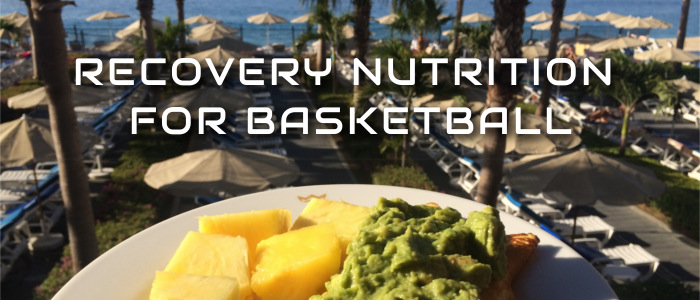
AVOCADOS. I’ve been eating avocados multiple times throughout the week. They’re high in monounsaturated fat and taste great on fajitas, fish, omelets, etc. The above picture is one of my favorites breakfasts: Spinach & mushroom omelet covered in avocados with fresh pineapple… oh, by the way… I wrote this post from Mexico 🙂
2. ADJUST INTAKE
Now that I’m not playing ball every week, I find myself not feeling as hungry throughout the day. I have to make sure I’m still getting enough food in because my body is working harder at rest to repair the damaged tissues.
I also don’t want to overeat and then worry about losing unwanted weight when I’ve finally recovered. It’s a fine balance that I’m still trying to figure out.
Here are the recovery nutrition strategies I’m using to adjust my intake:
5 SMALL MEALS. Instead of eating larger meals, I’ve switched to five smaller meals. This allows me to get nutrients in without feeling too full.
VEGGIES AS CARBS. My carbohydrates are coming primarily from vegetables and some fruits. Since I’m not depleting muscle glycogen from tough workouts, I don’t have to worry about eating foods like potatoes or rice.
ONLY 1 POWER SMOOTHIE. I’ve cut back to only having one Power Smoothie a day. When I’m training hard, I usually have one with breakfast and another right before bed.
3. REBUILD TISSUE
The protein we eat gets broken down into amino acids, which our body then uses to build our skin, hair, bones, muscles and tendons.
I actually haven’t made much of an adjustment here since this is an area I normally focus on. I still thought I’d include this in the blog post because it’s an important part of the recovery process.
Here are the recovery nutrition strategies I’m using to rebuild tissue:
EGGS FOR BREAKFAST. I always include a protein source in my breakfast. Most of us like eating cereal, toast, bagels and other carbohydrates in the morning, but it takes a little more effort to include foods like eggs or turkey. I like to have scrambled eggs because they only take five minutes to cook and taste great.
EAT FISH. I eat fish at least once a week. In addition to being a great source of protein, fish contain Omega 3 fatty acids which help with inflammation. This is a double bonus!
PROTEIN POWDER. I throw in a scoop of protein powder into my Power Smoothie. This adds an additional 25 grams of protein to the fruits, vegetables and nuts that are already in the drink.
As you can see, the changes I’ve made are simple but all play a part in speeding up the recovery process. I have another two months before I’m able to run and then I’ll have to reevaluate my routine and make sure that it’s supporting my goals.
If you’re interested in reading more about recovery nutrition, check out this 4-part article by Dr. John Berardi of Precision Nutrition:
Nutrition For Injury Recovery
Do you have any recovery nutrition tips that have helped you through an injury? If so, leave a comment below so I can hear about them!