goal mapping

WHAT YOU MEASURE IMPROVES

How bad do you want to reach your goal?  Bad enough to it write down and place it where you’ll see it day and night?  Bad enough to work towards it’s attainment every week, regardless of whether you’re sick, tired or injured?  If so, I can almost guarantee it’s going to happen.  

GOAL MAPPING

Here’s my three-step process for creating and tracking your path to success.  It involves goal mapping and reading an Affirmation every day.  I not only use it with my players, but my kids and I also have Goal Maps hanging in our rooms.  It might seem a little crazy, but it works!

STEP 1: TEST

When you’re following a map, it’s important to know your starting point.  If you want to dunk a basketball, you need to know how high you can touch.  If you want to improve your free throws, you have to know your current shooting percentage.

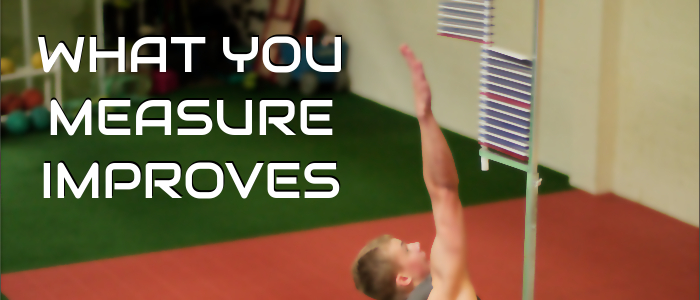
Do some research and select a test that will measure what you want to improve.  Then test yourself so you can find out your starting point for Goal Mapping.  My son Carter tests his vertical every month on a Vertec and we post the results on his bedroom wall.   

STEP 2: CREATE

Now that you know where you’re starting from, you can create the path to where you want to go.  I suggest Goal Mapping to track your monthly progress and writing an Affirmation to read every morning and night. 

Here’s a picture of my son Carter’s Goal Map that hangs on the wall in his room.  You can change the measurements and timeline to match your goal.  

Click the link to download a Goal Mapping pdf:

B4B Goal Mapping

In addition to goal mapping, you need to write an Affirmation Statement that will move your goal from your conscious brain to your subconscious mind.   

Words are powerful and what you repeatedly say to yourself creates your reality.  Make sure you’re building yourself up and reinforcing a positive attitude.  

Here’s a sample Affirmation that I use with my players who want to dunk.  You can change the highlighted areas to match your goal.

AFFIRMATION

By November 15, 2016, I will dunk on a 10-foot hoop.  To accomplish this goal, I will do my jumping program every week.

I believe with all my heart that I will dunk a basketball.  My faith is so strong that I can already feel the ball in the net with my hands on the rim.

I have a written training plan to increase my vertical and will follow it every week until I’m playing above the rim.

Write your Affirmation with a pen and paper and post it above your Goal Map.  Read the Affirmation while you’re brushing your teeth in the morning and before you go to bed.  

STEP 3: WORK

Dreams only come true when you wake up and go to work.  Follow your written plan every week and then test yourself at the end of the month to track your progress.

Depending on your goal, you might not see improvements every month.  Expect that this will happen and continue to track your progress.  Remember, what you measure improves!

You build self-confidence by continually setting goals and accomplishing them.  It’s the kind of unshakable confidence that can only be earned through hard work.  

Good luck with your Goal Mapping and Affirmations.  I’d love to see them when you’re finished.  Take a picture, post it on Instagram or Facebook and tag me so I can see the finished product.  
Nutrition game for basketball

HOW TO WIN THE NUTRITION GAME

We all know that nutrition impacts the way we feel, look and perform, yet most of us struggle to consistently make quality food choices.  Busy schedules cause us to skip meals and eat fast food on the run.  It takes all our will power just to make it to the gym, leaving us unmotivated to improve our diets.   So instead of adding another commitment to your busy life, try playing a game.   Taking advantage of the fact that we all love to play, the Basketball Nutrition Game turns eating healthy food into something to look forward to.  Players love to compete, especially when the results are looking and feeling better.   Here’s a simple and effective nutrition game to get you and your team excited about improving the way you eat:

RULES OF THE NUTRITION GAME

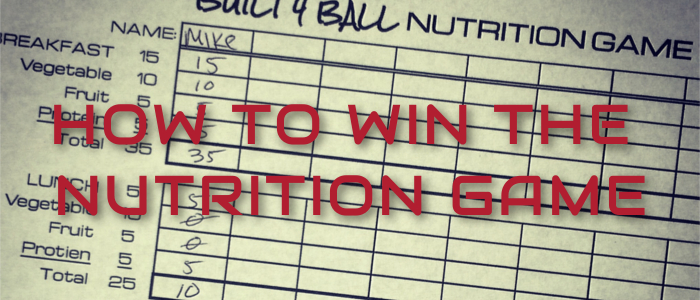
1.  Earn points by eating approved foods.
2.  Report the previous day’s points on a tracking sheet
3.  The highest point total for the week wins

Here’s a PDF version of the Tracking Sheet along with the Nutrition Game Rules:
B4B Nutrition Game

BREAKFAST
15 pts – Eat any breakfast
10 pts – Eat a vegetable
 5 pts – Eat fruit
 5 pts – Eat an approved protein source
Max of 35 points possible at breakfast

 LUNCH  5 pts – Eat any lunch
10 pts – Eat a vegetable
  5 pts – Eat fruit
  5 pts – Eat an approved protein source
Max of 25 points possible at lunch DINNER
  5 pts – Eat any dinner
10 pts – Eat a vegetable
  5 pts – Eat fruit
  5 pts – Eat an approved protein source
Max of 25 points possible at dinner SNACKS
  5 pts – Eat a snack
  5 pts – Eat a 2nd snack
Max of 10 points possible for snacks WATER
  5 pts – Drink only water for the day
Max of 5 points possible for water

100 points possible for the day

3 VERSIONS OF THE NUTRITION GAME

Here are three ways to keep the Basketball Nutrition Game fresh and new:

PLAYER VS PLAYER
The player that earns the most points gets to choose conditioning for the day, gets bragging rights, etc.  

TEAM CHALLENGE
If the teams earns enough points for the week, they get to choose conditioning, etc. 

COACHES VS PLAYERS
Average the total points for the coaches and compare it to the average total points for the players.   

Try out the Basketball Nutrition Game and let me know how it goes.  I’d love to hear your successes and challenges.  Good luck!

Recovery Nutrition for Basketball

RECOVERY NUTRITION FOR BASKETBALL

Like we do every Sunday, a group of my best friends gathered at the Warehouse Basketball Facility to play hoops before the Super Bowl.  I warmed-up well, briefly stretched out and began to play.  Up to this point, there was nothing unusual about the morning.  I had no idea that 45 minutes later I would rupture my Achilles tendon. To improve rehab time and make up for the fact that I won’t be able to play hoops for at least eight months, I’ve implemented some recovery nutrition strategies.   Anytime you’re making changes to your diet after surgery, it’s important to check with your doctor.  I chatted with my surgeon and he was comfortable with me starting this recovery nutrition regimen after my first check-up.   Here is a brief overview of the three recovery nutrition areas I’m focusing on:

1. DECREASE INFLAMMATION

Although inflammation is a necessary part of the healing process, it can also hinder recovery if you’re not able to reduce swelling and allow new blood to enter the injured area. 

There are a ton of different foods and supplements that will help with swelling, but it would be overkill to try them all.  

Here are the recovery nutrition strategies that I’m using to decrease inflammation:

FISH OIL. I’ve added a spoonful of fish oil into my Power Smoothie.  Fish oil contains Omega-3 fats which are a powerful anti-inflammatory.  Make sure you buy a quality brand that won’t cause you to burp up a fish taste.    

TURMERICI take turmeric every night.  If you haven’t heard of it before, it’s a plant that contains curcumin, which is used to help reduce inflammation.  To make it convenient, I bought it in pill form and take it with a glass of water before bed.  

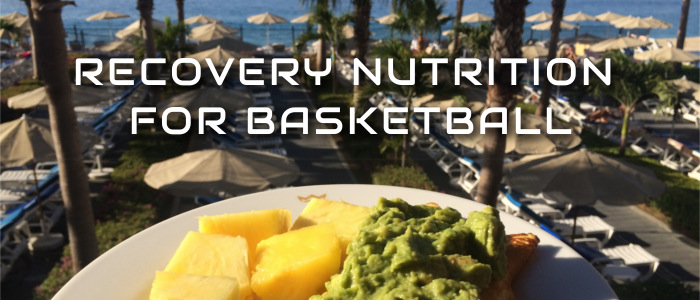
AVOCADOS.  I’ve been eating avocados multiple times throughout the week.  They’re high in monounsaturated fat and taste great on fajitas, fish, omelets, etc.  The above picture is one of my favorites breakfasts: Spinach & mushroom omelet covered in avocados with fresh pineapple… oh, by the way… I wrote this post from Mexico 🙂

2. ADJUST INTAKE

Now that I’m not playing ball every week, I find myself not feeling as hungry throughout the day.  I have to make sure I’m still getting enough food in because my body is working harder at rest to repair the damaged tissues.  

I also don’t want to overeat and then worry about losing unwanted weight when I’ve finally recovered.  It’s a fine balance that I’m still trying to figure out.  

Here are the recovery nutrition strategies I’m using to adjust my intake:

5 SMALL MEALS.  Instead of eating larger meals, I’ve switched to five smaller meals.  This allows me to get nutrients in without feeling too full.

VEGGIES AS CARBS.  My carbohydrates are coming primarily from vegetables and some fruits.  Since I’m not depleting muscle glycogen from tough workouts, I don’t have to worry about eating foods like potatoes or rice.  

ONLY 1 POWER SMOOTHIE.  I’ve cut back to only having one Power Smoothie a day.  When I’m training hard, I usually have one with breakfast and another right before bed. 

3. REBUILD TISSUE

The protein we eat gets broken down into amino acids, which our body then uses to build our skin, hair, bones, muscles and tendons.  

I actually haven’t made much of an adjustment here since this is an area I normally focus on.  I still thought I’d include this in the blog post because it’s an important part of the recovery process.  

Here are the recovery nutrition strategies I’m using to rebuild tissue:

EGGS FOR BREAKFAST.   I always include a protein source in my breakfast.  Most of us like eating cereal, toast, bagels and other carbohydrates in the morning, but it takes a little more effort to include foods like eggs or turkey.  I like to have scrambled eggs because they only take five minutes to cook and taste great.

EAT FISH.   I eat fish at least once a week.  In addition to being a great source of protein, fish contain Omega 3 fatty acids which help with inflammation.  This is a double bonus!

PROTEIN POWDER.  I throw in a scoop of protein powder into my Power Smoothie.  This adds an additional 25 grams of protein to the fruits, vegetables and nuts that are already in the drink.  

As you can see, the changes I’ve made are simple but all play a part in speeding up the recovery process.  I have another two months before I’m able to run and then I’ll have to reevaluate my routine and make sure that it’s supporting my goals.  

If you’re interested in reading more about recovery nutrition, check out this 4-part article by Dr. John Berardi of Precision Nutrition:

Nutrition For Injury Recovery

Do you have any recovery nutrition tips that have helped you through an injury?  If so, leave a comment below so I can hear about them!

Nutrition Habits

THE 6-WEEK NUTRITION SCHOOL

Basketball Nutrition is so powerful in helping athletes reach their goals, that I’d rather see players miss a workout rather than miss a meal.  With off-season training ramping up, this is the perfect time to focus on eating better.  In this post, I’ll explain the 6 nutrition habits I use with my athletes to keep them on track throughout the year.

NUTRITION vs WORKOUTS

When you lift, you’re actually breaking down your muscles and you finish the workout weaker than when you started.   Don’t believe me?  Try doing as many push-ups as you can after a tough workout and I guarantee it will be a lot less than what you could do when you’re fresh.   So why do we continue to workout hard if it makes us weaker?  Because if you rest and refuel properly, your body will recover and grow even stronger than it was before.  Since your muscles are made from the food you eat, improving your nutrition habits is one of the biggest keys to getting better.

NUTRITION SCHOOL

A great friend and colleague of mine, Peter Clark, and I have put together a 6-week Basketball Nutrition School for our college athletes and we revisit it multiple times throughout the year.  While the nutrition habits we teach might seems simple, it doesn’t mean they’re easy to do.

Before we review the nutrition habits, here are a couple things we’ve learned the hard way:

1.  Just because you hear something one time, doesn’t mean that you’ve implemented it into your daily routine and mastered it.  I’ve found that going back to the basics throughout a season allows players to adjust their nutrition habits to their changing schedules.

2.  We also don’t give them all the information at once. We give them one nutrition habit per week and make sure that they’re successful with it before moving on to the next one.

Here is a list of the 6 Basketball Nutrition Habits we teach, along with one homework assignment that we give out each week:

6 BASKETBALL NUTRITION HABITS

1.  Snacks – Make a Power Smoothie
2.  Breakfast – Make an omelette
3.  Lunch – Make a salad
4.  Dinner – Make fajitas
5.  Water – Pack your water bottle
6.  Sugar – Sacrifice for a healthy treat

I like starting off Nutrition School by adding snacks because it’s the easiest thing to add and it pays off with huge results.  The biggest mistake I see with athletes is that they don’t get enough whole foods throughout the day.  The Power Smoothie is a great tasting way to sneak in some fruits and veggies and it literally only takes a few minutes to blend one up.

I give them limited instructions on how to make it because I usually learn a few tips by what they report back to me.  The players are really proud of themselves when they come up with a unique flavor combination.  The only guidelines I give them is that everyone is responsible for having:

SHOPPING LIST

1.  Blender
2.  Frozen fruit
3.  Frozen vegetable
4.  Nut butter
5.  Protein powder

Even with these few requirements, the options are almost endless.  I’ve used blueberries, peaches, cherries and strawberries for the fruit.  I usually use a combination of spinach, kale and chard for the vegetables.  For nut butters, I rotate either almond butter, peanut butter or cashew butter into my Power Smoothies.

Here’s a recipe that I’ve been loving lately:

BERRY CREAMSICLE SMOOTHIE

 – Water
– Frozen berry mix (strawberries, blackberries, blueberries)
– Frozen spinach
– Natural peanut butter
– Creamsicle flavored whey protein powder

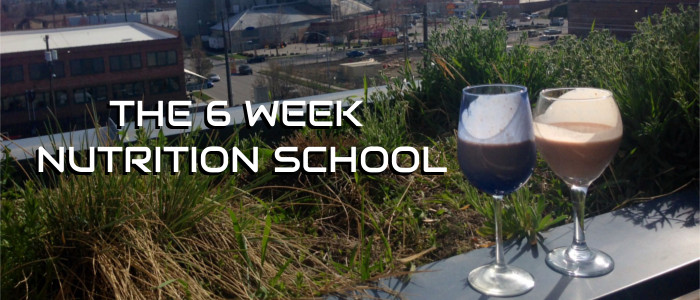
To hold players accountable, I have them take a picture of their smoothie creation and text it to me.  The picture for this blogpost was taken by some of my players after a tough workout.

This has been a fun way to get to know my athletes a little better and stay in good communication with them throughout the season.  To spice it up a little, whoever sends the most creative picture gets to choose our conditioning for the day.

Do you have effective ways of helping athletes eat better that you’d like to share?  I’d love to learn about them.  Please leave your comments to help out our players, coaches and parents.  I’m excited to hear what you come up with!