goal mapping

WHAT YOU MEASURE IMPROVES

How bad do you want to reach your goal?  Bad enough to it write down and place it where you’ll see it day and night?  Bad enough to work towards it’s attainment every week, regardless of whether you’re sick, tired or injured?  If so, I can almost guarantee it’s going to happen.  

GOAL MAPPING

Here’s my three-step process for creating and tracking your path to success.  It involves goal mapping and reading an Affirmation every day.  I not only use it with my players, but my kids and I also have Goal Maps hanging in our rooms.  It might seem a little crazy, but it works!

STEP 1: TEST

When you’re following a map, it’s important to know your starting point.  If you want to dunk a basketball, you need to know how high you can touch.  If you want to improve your free throws, you have to know your current shooting percentage.

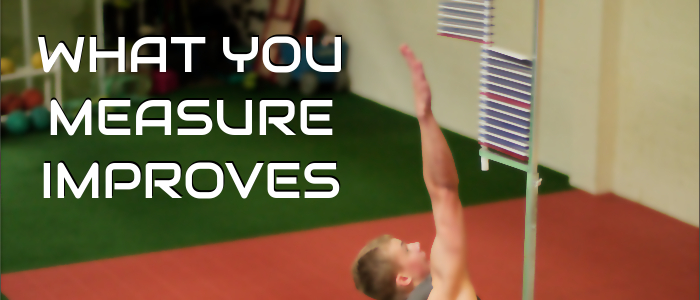
Do some research and select a test that will measure what you want to improve.  Then test yourself so you can find out your starting point for Goal Mapping.  My son Carter tests his vertical every month on a Vertec and we post the results on his bedroom wall.   

STEP 2: CREATE

Now that you know where you’re starting from, you can create the path to where you want to go.  I suggest Goal Mapping to track your monthly progress and writing an Affirmation to read every morning and night. 

Here’s a picture of my son Carter’s Goal Map that hangs on the wall in his room.  You can change the measurements and timeline to match your goal.  

Click the link to download a Goal Mapping pdf:

B4B Goal Mapping

In addition to goal mapping, you need to write an Affirmation Statement that will move your goal from your conscious brain to your subconscious mind.   

Words are powerful and what you repeatedly say to yourself creates your reality.  Make sure you’re building yourself up and reinforcing a positive attitude.  

Here’s a sample Affirmation that I use with my players who want to dunk.  You can change the highlighted areas to match your goal.

AFFIRMATION

By November 15, 2016, I will dunk on a 10-foot hoop.  To accomplish this goal, I will do my jumping program every week.

I believe with all my heart that I will dunk a basketball.  My faith is so strong that I can already feel the ball in the net with my hands on the rim.

I have a written training plan to increase my vertical and will follow it every week until I’m playing above the rim.

Write your Affirmation with a pen and paper and post it above your Goal Map.  Read the Affirmation while you’re brushing your teeth in the morning and before you go to bed.  

STEP 3: WORK

Dreams only come true when you wake up and go to work.  Follow your written plan every week and then test yourself at the end of the month to track your progress.

Depending on your goal, you might not see improvements every month.  Expect that this will happen and continue to track your progress.  Remember, what you measure improves!

You build self-confidence by continually setting goals and accomplishing them.  It’s the kind of unshakable confidence that can only be earned through hard work.  

Good luck with your Goal Mapping and Affirmations.  I’d love to see them when you’re finished.  Take a picture, post it on Instagram or Facebook and tag me so I can see the finished product.  

Rebounding exercise for basketball

BUILD STRENGTH FOR REBOUNDING

Great rebounders don’t wait for the ball to come to them… they go get it. Grabbing boards in traffic requires mobility and strength above your head in every direction. While traditional strength exercises are helpful for most athletes, basketball players need to train for the specific requirements of their game. 

The Overhead Shoulder Matrix was designed by the Gray Institute and is the perfect rebounding exercise for battling under the boards.

This article was originally written for the Spokane Hoopfest Blog.  To read the entire article and learn more about Hoopfest, click HERE

THE PERFECT REBOUNDING EXERCISE

The Overhead Shoulder Matrix utilizes the fact that there are three planes of motion that your body has to be strong in: sagittal, frontal, and transverse.

We rebound in the sagittal plane when the ball is in front or behind us.

We rebound in the frontal plane when we side bend in the air.

We rebound in the transverse plane when we have to rotate to grab the ball.

As a general rule of thumb, basketball players should focus on total body exercises instead of isolation exercises in the weight room. The Overhead Shoulder Matrix trains all the muscles that link your feet to your hands and is perfect for players looking to increase functional upper body strength.  

Here’s a quick video of my favorite rebounding exercise:

https://www.youtube.com/watch?v=ZeN52_Pxjhg

To read the full article, checkout the Spokane Hoopfest Blog, home of the world’s largest 3-on-3 basketball tournament.  There you’ll find basketball training and nutrition tips, as well as inspiring stories about people who love hoops. 

What’s your favorite Basketball Rebounding Exercise?  Share it with the B4B community so we can dominate the boards together.  

Basketball core exercises MB Double Fake

TRAIN YOUR CORE FOR BASKETBALL

Go to most gyms and you’ll see people training their core muscles by doing Sit-Ups, V-Ups and Crunches. While these exercise are helpful in strengthening your abdominals while lying down, basketball players need core strength when cutting, posting up and finishing at the rim. If you want to get more than just six-pack abs out of your training, keep reading to learn three ways to create basketball core exercises.

This article was originally written for the Spokane Hoopfest Blog.  To read the entire article and learn more about Hoopfest, click HERE

1.  TRAIN ON YOUR FEET

Training should be specific to the demands of your sport. Since basketball is played standing up, basketball core exercises should be performed standing up.

2. TRAIN IN 3 PLANES OF MOTION

Our core muscles need to decelerate and accelerate movement in three planes of motion. Exercises like crunches improve flexion and extension but leave us weak when we need to bend and rotate.

3. TRAIN QUICK

The majority of abdominal exercises performed in the gym are done slowly to increase the burn. While controlling motion is important, our core muscles also need to be explosive.

BASKETBALL CORE EXERCISES

My favorite basketball core exercise is the Medicine Ball Double Fake. It’s helped me rip the ball through defender’s hands and increase the quickness of my live-ball moves.

Here’s a quick video of the MB Double Fake:

https://www.youtube.com/watch?v=2Swd210HxKc

To read the full article, checkout the Spokane Hoopfest Blog, home of the world’s largest 3-on-3 basketball tournament.  There you’ll find basketball training and nutrition tips, as well as inspiring stories about people who love hoops.  

What are your favorite basketball core exercises?  Are they performed standing up?  Are they in 3 planes of motion?  Will they improve your quickness?  Leave a comment below and share with the B4B community!